For decades, one of modern medicine’s most stubborn puzzles has been the problem of biological compatibility. Organ transplants save countless lives each year, yet they are still governed by the ancient logic of blood types, a system that determines who can safely receive an organ and who must continue waiting. A patient with type O blood, for example, can only receive an organ from another type O donor, while their own organs can be given universally to anyone else. It’s a twist of biology that leaves type O patients at a disadvantage, often waiting years longer for a compatible kidney while their health slowly declines.
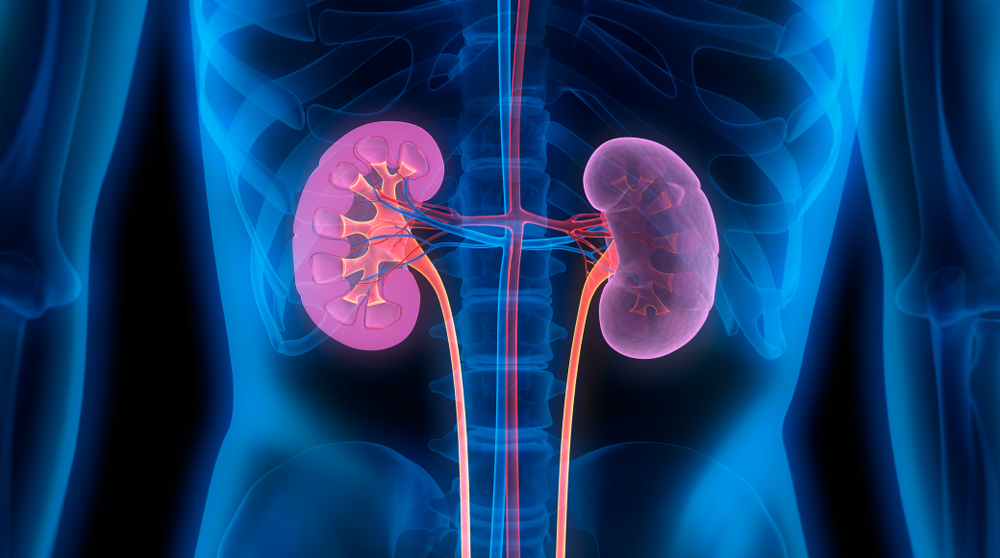
Now, a team of scientists from Canada and China has managed something that could eventually dissolve that barrier altogether: a “universal” kidney, stripped of the molecular markers that cause rejection, and theoretically capable of being transplanted into any patient, regardless of blood type. Using enzymes developed at the University of British Columbia (UBC), researchers successfully converted a type-A kidney into a type-O organ and transplanted it into the body of a brain-dead recipient. For several days, the kidney functioned normally, the first time such an experiment has succeeded in a human model. Though the organ began to show signs of mild rejection by the third day, the reaction was far less severe than what usually follows a mismatched transplant. The result marks a quiet revolution in transplantation science, the first step toward organs that are truly universal.
Breaking the Blood Barrier
The challenge of blood-type compatibility stems from a simple biochemical reality. Each blood type A, B, AB, or O is defined by specific sugar molecules, called antigens, that sit on the surface of red blood cells and tissues. The immune system recognizes these antigens as identifiers. If it encounters an unfamiliar antigen, it launches a rapid defense, attacking the perceived invader. That’s why a patient with type O blood, whose cells carry no A or B antigens, reacts violently to an organ from someone with a different blood type. In transplantation, this immune reaction is catastrophic, leading to what doctors call “hyperacute rejection,” where the recipient’s body destroys the new organ within minutes or hours.
To prevent this, physicians have long relied on immune-suppressing drugs or complex desensitization treatments that “train” the immune system to tolerate the new organ. These methods are lifesaving but risky, expensive, and time-consuming.
They are also limited to living donors, since the recipient must undergo careful preparation before the transplant. The ideal solution, scientists realized, would be to modify the organ itself to erase its blood-type identity before it ever meets its new host.
That’s where the UBC team’s discovery comes in. Dr. Stephen Withers, a biochemist and professor emeritus at UBC, along with his colleague Dr. Jayachandran Kizhakkedathu, has spent over a decade exploring ways to make “universal donor blood.” Their research led to the discovery of enzymes that can snip away the sugar chains defining blood types. These enzymes act like microscopic scissors, cleaving off the molecular “nametag” that marks type A blood and revealing a neutral surface beneath, the universal type O. When applied to a kidney, this enzymatic process effectively transforms the organ’s biological identity, making it invisible to a recipient’s immune surveillance.
The First Human Trial
After years of successful trials on blood and organs outside the body, the researchers took the next leap: testing the enzyme-converted kidney in a human body. With consent from the family of a brain-dead donor, they transplanted the modified kidney originally from a type-A donor into the recipient’s body. For two days, the kidney worked beautifully. Blood flowed through its vessels; waste was filtered; the organ showed no signs of hyperacute rejection. On the third day, traces of the original blood-type markers reappeared, triggering a mild immune response. But rather than the severe rejection that would typically occur in such a case, the reaction was subdued, and the body even began to show signs of adapting to the organ.
This was a small but profound proof of concept. It demonstrated that enzyme-converted organs can survive in the human body long enough to suggest clinical viability. The process does not yet produce permanent results. The reappearance of antigens remains a challenge but the outcome confirmed that the immune system’s initial response could be softened. As Dr. Withers put it, “It’s like removing the red paint from a car and uncovering the neutral primer underneath. Once that’s done, the immune system no longer sees the organ as foreign.”
The breakthrough was reported in Nature Biomedical Engineering under the title “Enzyme-converted O kidneys allow ABO-incompatible transplantation without hyperacute rejection in a human decedent model.” Beyond its technical success, the experiment has offered researchers invaluable data about how to refine the enzyme treatment and how the immune system might be coached toward long-term acceptance of such organs.
How the Enzyme Conversion Works
To create the universal kidney, researchers used a method known as ex vivo perfusion literally “through-life flow.” The kidney is placed in a specialized preservation device and perfused with a fluid containing the enzyme cocktail. The enzymes move through the organ’s blood vessels, methodically removing the A-type sugar molecules that would otherwise flag the kidney as foreign. Within about two hours, the organ’s surface antigens are almost completely stripped away, effectively converting it to type O.
What makes this method revolutionary is its simplicity. Perfusion devices are already standard in organ preservation and transplantation. The only addition is the enzyme solution. Once perfected, this approach could be integrated into existing transplant procedures without major changes to infrastructure. In principle, any organ heart, liver, lung could undergo the same treatment.
The two key enzymes used were identified in 2019 by the UBC team from gut bacteria that naturally consume sugars similar to blood-group antigens. The discovery was a serendipitous intersection of microbiology and medicine. Bacteria living in the human intestine had evolved molecular tools to digest complex carbohydrates, including those found on blood cells. Scientists realized these enzymes could be repurposed to gently “erase” blood-type markers from donor tissues. In 2022, the same enzymes were used to convert lungs from type A to type O in the lab, and those converted lungs were shown to function normally when tested outside the body. The kidney transplant experiment marks the next logical step, bringing the science into a living system.
The Promise and the Challenge
The implications of universal organs are enormous. Every year, thousands of patients die waiting for a compatible kidney. In the United States alone, more than 11 people die each day while on transplant waiting lists, and over half of those waiting are type O. Because type O kidneys can be used in any patient, they are always in high demand, leaving O-type recipients waiting two to four years longer than others. By eliminating the blood-type barrier, the enzyme conversion method could dramatically expand the donor pool. A kidney from a type A, B, or AB donor could be made compatible for anyone, reducing wait times and potentially saving thousands of lives.
Beyond kidney transplants, this technology could reshape how medicine approaches organ compatibility altogether. It opens doors to using organs from deceased donors that might otherwise go unused due to mismatch. It could also streamline emergency procedures, where finding a compatible organ in time is often impossible. Furthermore, the technique might one day work in tandem with other innovations such as lab-grown or genetically engineered organs to create a fully flexible transplant system.
Still, significant hurdles remain. The reappearance of antigens, as observed on the third day of the trial, suggests that some blood-type molecules may be regenerated by the organ itself or by the recipient’s cells. Researchers must find ways to suppress or neutralize this re-expression to achieve lasting compatibility. There is also the broader question of long-term immune tolerance, whether the human body can truly adapt to an enzyme-converted organ without continuous intervention. These are the problems the next phase of research and clinical trials will need to address.
Ethical and Clinical Frontiers
As with any transformative medical technology, the emergence of universal organs raises questions beyond biology. On the clinical side, scientists must prove that enzyme conversion does not compromise the organ’s function or longevity. Regulatory approval will require large-scale human trials, most likely beginning with kidneys from deceased donors before moving to living transplants. A UBC spin-off company, Avivo Biomedical, is already leading efforts to bring the enzyme system to market and to develop universal donor blood for transfusions.
Ethically, the breakthrough could reshape the landscape of organ donation. A universal organ system would mean greater fairness in allocation no longer would blood type dictate a person’s chance of survival. But it could also spark new debates about the commercialization of enzyme-converted organs, access to the technology, and how medical systems prioritize patients once compatibility ceases to be a limiting factor. Historically, every leap in transplant science from the first successful kidney transplant in 1954 to the introduction of immunosuppressants in the 1980s has carried such social and ethical ripples. The “universal kidney” is no exception.
In a broader sense, this research challenges our concept of individuality at the biological level. Blood type, once considered a fixed and defining feature of a person’s identity, is revealed here as a mutable characteristic, something that can be edited, softened, or even erased. This blurring of biological boundaries mirrors the ongoing shift in medicine from rigid categories toward adaptable systems, where compatibility is engineered rather than inherited.
From the Laboratory to the Living World
Every major medical breakthrough begins as a hypothesis tested under highly controlled conditions. The enzyme-converted kidney is still far from being a standard clinical practice. Yet its success in a human model has already begun to ripple across the global transplant community. Other research groups are investigating similar enzyme systems, while complementary studies explore gene-editing approaches that could permanently silence the genes responsible for blood-type antigens. The convergence of these techniques enzymatic, genetic, and mechanical could one day yield a suite of tools for customizing organs on demand.
Even within the narrow confines of this single experiment, the data are rich with potential insights. The mild immune reaction observed after the third day may not be a failure but a clue evidence that the human body can learn to tolerate an altered organ more easily than a completely foreign one. If scientists can map that immune dialogue, they might uncover ways to induce long-term harmony between donor and recipient without lifelong immunosuppression.
Meanwhile, Avivo Biomedical’s work in developing enzyme-converted blood could serve as a proving ground for safety and scalability. If hospitals can routinely transform blood into the universal type O for transfusions, the path toward enzyme-converted organs becomes clearer. Each step strengthens the case that compatibility, once thought to be one of nature’s strictest laws, is more flexible than we ever imagined.
The Future of Transplantation Has Already Begun
The creation of a universal kidney marks one of the most remarkable milestones in modern transplant science. It demonstrates that the barriers separating donor and recipient can be crossed not through brute force or immune suppression, but through subtle molecular understanding. Though challenges remain from antigen reappearance to regulatory approval, the path forward is unmistakable. Each refinement brings us closer to a world where organ shortages are eased, where compatibility is no longer a cruel lottery, and where the molecular language of the body can be rewritten in the service of life.
Science has long been driven by the desire to transcend limitation. The enzyme-converted kidney embodies that impulse in its purest form: a tool that erases boundaries, honors human ingenuity, and transforms biology’s ancient rules into new possibilities. Suppose the history of medicine is a story of finding unity in complexity. In that case, this breakthrough stands as its latest and perhaps most elegant chapter one where the universal becomes, at last, human.
Some of the links I post on this site are affiliate links. If you go through them to make a purchase, I will earn a small commission (at no additional cost to you). However, note that I’m recommending these products because of their quality and that I have good experience using them, not because of the commission to be made.





 JOIN OVER
Comments