Forčić, D., Mršić, K., Perić-Balja, M., Kurtović, T., Ramić, S., Silovski, T., Pedišić, I., Milas, I., & Halassy, B. (2024). An Unconventional Case Study of Neoadjuvant Oncolytic Virotherapy for Recurrent Breast Cancer. Vaccines, 12(9), 958. https://doi.org/10.3390/vaccines12090958
When virologist Beata Halassy faced a third recurrence of breast cancer, she made a decision that defied standard medical protocols and terrified her colleagues. Unwilling to endure another round of chemotherapy, she turned to her own laboratory for a solution. Halassy cultivated specific viruses and injected them directly into her own tumor, becoming both the lead scientist and the test subject in a high-stakes experiment. Her gamble challenged the strict ethics of modern medicine, but the outcome has forced the scientific community to take a hard look at an unconventional path to survival.
A Radical Approach to Recurrence
When Beata Halassy, a virologist at the University of Zagreb, discovered a stage 3 recurrence of breast cancer in 2020, she made a decision that defied standard medical protocols. Facing her third bout with the disease and unwilling to endure another round of chemotherapy, Halassy utilized her laboratory expertise to become her own test subject. She designed a personal regimen of oncolytic virotherapy (OVT), an emerging treatment method that uses viruses to attack cancer cells and provoke an immune response.
Halassy cultivated two specific viruses in her lab: a measles virus strain typically used in childhood vaccines and a vesicular stomatitis virus (VSV). Scientific literature indicated that both pathogens could infect the specific cell type of her tumor. Over a two-month period, a colleague administered the research-grade viral injections directly into Halassy’s tumor while her oncologists monitored her condition to ensure safety.
https://www.youtube.com/watch?v=mCmJQGpjGNA&t=1s
The self-experiment yielded significant clinical results. The tumor shrank substantially, softened, and detached from the pectoral muscle and skin it had invaded. This detachment allowed surgeons to easily remove the remaining mass. Biopsies later confirmed the treatment had triggered a robust immune response against the cancer cells. Following the surgery and a year of treatment with the anticancer drug trastuzumab, Halassy has remained cancer-free for four years.
How the Treatment Works
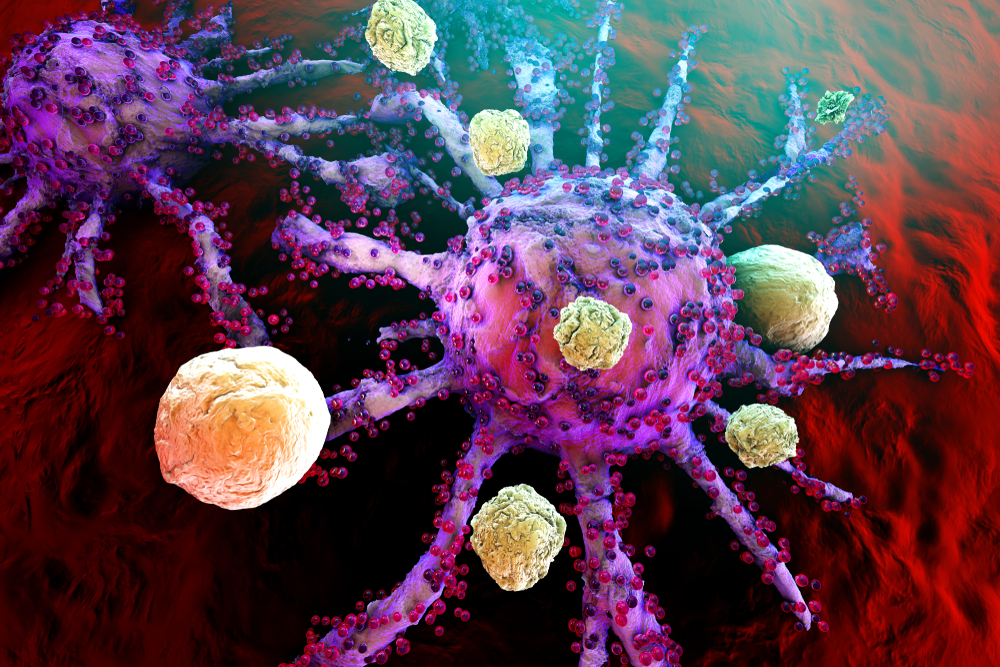
Oncolytic virotherapy (OVT) is a type of cancer treatment that uses viruses as a weapon. It works in two ways: first, the virus attacks and destroys cancer cells directly. Second, it acts like a flare, alerting the immune system to the tumor’s location so the body can join the fight. While this sounds promising, it is still an emerging field. Right now, there is only one approved OVT treatment in the United States, and it is strictly for melanoma (skin cancer). There are no approved OVT treatments for breast cancer.
For her experiment, Halassy used a specific one-two punch. She started with a measles virus—the same kind used in standard childhood vaccines. She followed that with a vesicular stomatitis virus (VSV), which usually only causes mild flu symptoms. She chose these two because previous research showed they are effective at infecting the specific type of cells found in her tumor.
While Halassy’s success is impressive, experts point out that the science itself isn’t a brand-new discovery. Doctors are already studying how to use viruses to treat cancer. Stephen Russell, a specialist in the field, noted that the real surprise here wasn’t the biology. As he explained to Nature, the novelty was simply that “she did it to herself with a virus that she grew in her own lab.”
An Unpublishable Cure?
Although Halassy has been cancer-free for four years, sharing her success with the scientific community proved difficult. When she attempted to publish a paper detailing her experiment, she faced rejection from over a dozen journals. The primary hesitation for editors was not the validity of her data, but the ethical implications of self-experimentation. They worried that publishing the report might encourage other patients to reject standard medical care and attempt risky, unproven treatments on themselves.
Jacob Sherkow, a law and medicine researcher at the University of Illinois-Champaign, highlighted this delicate balance. He noted that journals must weigh the importance of documenting scientific data against the risk of promoting dangerous behavior. While he believes the knowledge gained from Halassy’s experience should not be lost, he told Nature that the case “isn’t a slam-dunk” ethically. The concern is that people without Halassy’s specialized training could try similar methods with disastrous results.
Despite these hurdles, Halassy persisted because she felt a responsibility to share her findings. Eventually, the journal Vaccines agreed to publish the report in August, labeling it an “unconventional case study.” Halassy credits the “brave editor” who recognized the value of the research despite the controversial method behind it.
Shifting Focus to Animal Studies
Halassy’s decision to become her own patient places her in a long, albeit quiet, lineage of scientists who have experimented on themselves. While the practice is often stigmatized and ethically complex, it has historically played a role in medical discovery. However, Halassy emphasizes that her case is unique to her skillset. She does not believe her experiment will trigger a wave of copycats simply because the procedure requires advanced scientific knowledge and technical ability to cultivate and purify viruses safely.
The success of this gamble did more than just clear her cancer; it completely redirected her professional path. Inspired by the positive results of her self-treatment, Halassy shifted the focus of her laboratory work. She recently secured funding to investigate the use of oncolytic virotherapy (OVT) for treating cancer in domestic animals.
By pivoting her research to help pets, Halassy hopes to gather more data on the safety and efficacy of these viral treatments. This approach allows her to contribute to the field of virotherapy through standard, regulated scientific channels, ensuring that the knowledge gained from her risky personal experiment leads to legitimate medical advancements.
Key Takeaways for Patients
Beata Halassy’s experience is a rare exception, not a new rule. Her success relied on specialized training and access to research-grade materials. For patients and families navigating a cancer diagnosis, here is how to interpret this story safely:
Do Not DIY Medical Care: Attempting to replicate medical procedures without professional training is dangerous. Treatments require precise dosing and sterile conditions that cannot be achieved at home. Halassy herself warned that her experiment requires too much scientific skill for others to copy safely.
Look for Clinical Trials: If standard treatments are not effective, ask doctors about clinical trials. This is the safe pathway to access experimental therapies like OVT. Trials ensure that patients are monitored by experts who can manage side effects immediately. This allows access to cutting-edge science without the risks of uncontrolled self-experimentation.
Keep Doctors in the Loop: Even during her self-experiment, Halassy had her oncologists on standby. Patients considering alternative therapies must communicate with their medical team. This ensures that new choices do not conflict with primary treatments or cause unexpected harm.
Understand the Data: In science, Halassy’s case is known as an “N of 1” study, meaning the experiment involved only one person. What works for one individual’s specific biology may not work for another. Reliable medicine is built on large studies involving hundreds of participants to prove safety for the general population.
The Real Takeaway
Halassy’s story sounds like science fiction, but the results are very real. She took a massive gamble when she felt she had no other options, and in her specific case, it paid off. But the real value here isn’t just that she survived; it is that she forced us to look harder at a treatment that could eventually save thousands of others.
We shouldn’t look at this experiment as a green light for DIY medicine. Instead, we should see it as a push for the medical community to speed up. The science of using viruses to fight cancer is valid, but it needs to move out of the “experimental” phase and into standard care.
We need more clinical trials and better funding to refine these therapies. The goal is to ensure that the next time a patient faces a difficult diagnosis, they don’t have to be a virologist to access a cure. They should have a safe, approved, and effective option waiting for them at the hospital. Until then, we let the experts handle the petri dishes while we advocate for the research that makes these breakthroughs accessible to everyone.
https://www.youtube.com/watch?v=tRSDpW3Zlec
Source:
Forčić, D., Mršić, K., Perić-Balja, M., Kurtović, T., Ramić, S., Silovski, T., Pedišić, I., Milas, I., & Halassy, B. (2024). An Unconventional Case Study of Neoadjuvant Oncolytic Virotherapy for Recurrent Breast Cancer. Vaccines, 12(9), 958. https://doi.org/10.3390/vaccines12090958
Some of the links I post on this site are affiliate links. If you go through them to make a purchase, I will earn a small commission (at no additional cost to you). However, note that I’m recommending these products because of their quality and that I have good experience using them, not because of the commission to be made.







 JOIN OVER
Comments