For decades, the words “incurable cancer” have carried a heavy finality. They signal the moment when treatment options run out, when medicine shifts from fighting the disease to managing symptoms and time becomes painfully finite. For families facing aggressive blood cancers that resist every standard therapy, this moment often arrives far too soon.
But a pioneering new treatment developed in the United Kingdom is quietly reshaping that narrative. In an early clinical trial involving patients with an especially aggressive form of leukaemia, a radical gene-edited immune therapy cleared the disease in nearly two thirds of participants. For some, that remission has lasted for years. For others, it opened a door that had previously been firmly shut.
The therapy is called BE-CAR7, and while it is not a cure-all, it represents something profoundly meaningful for patients who once had no remaining options at all: hope grounded in science rather than speculation.
https://www.youtube.com/watch?v=yJwsE5BaT-U
A Cancer That Leaves Little Room for Second Chances
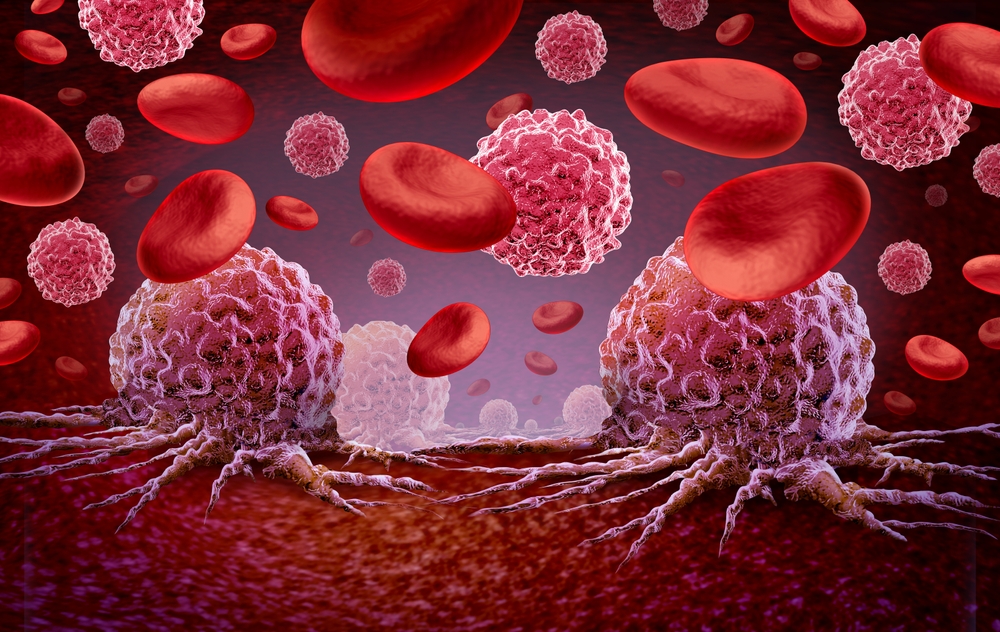
T-cell acute lymphoblastic leukaemia, often shortened to T-ALL, is a rare but fast-moving blood cancer. It arises from T-cells, a type of white blood cell that normally plays a central role in defending the body against infections. When these cells turn cancerous, they multiply rapidly and crowd out healthy blood cells, leaving patients vulnerable to infection, bleeding, and organ failure.
Standard treatment for T-ALL usually begins with intensive chemotherapy, often followed by a stem cell or bone marrow transplant. For many patients, especially children, these treatments can be successful. But for roughly 20 percent, the disease either does not respond or returns after initially improving.
In those cases, options become painfully limited. Repeating chemotherapy often offers diminishing returns. A second transplant can be extremely risky. For some families, doctors must eventually explain that there is no established treatment left that can realistically control the cancer. It is precisely this group of patients that the BE-CAR7 trial was designed to help.
Turning Donor Immune Cells Into a Living Drug
At its core, BE-CAR7 is an advanced form of immunotherapy, a field that has already transformed the treatment of certain cancers. Immunotherapies work by harnessing the body’s own immune system to recognise and destroy cancer cells.
One of the most successful examples is CAR T-cell therapy. In these treatments, doctors collect a patient’s own T-cells, genetically modify them in a laboratory so they can recognise cancer, and then infuse them back into the body.
However, CAR T-cell therapy becomes far more complicated when the cancer itself is made of T-cells, as is the case with T-ALL. Simply adding more T-cells risks chaos. The engineered cells may attack each other, be destroyed by the patient’s immune system, or fail to distinguish healthy cells from cancerous ones.
The BE-CAR7 approach solves this problem in an unusually elegant way. Instead of using a patient’s own cells, scientists start with healthy T-cells from a donor. These cells are then extensively edited using a technique known as base editing, a highly precise form of gene editing that allows researchers to change individual letters of DNA.
Through a series of carefully planned edits, the donor cells are stripped of features that would normally trigger immune rejection or self-destruction. They are then equipped with a chimeric antigen receptor, or CAR, that directs them to hunt down cells carrying a specific marker found on T-ALL cancer cells.
The result is what some researchers describe as a “living drug”, immune cells that have been redesigned to perform a very specific and powerful task inside the human body.
Alyssa’s Story and the First Leap Into the Unknown
The first person in the world to receive BE-CAR7 was Alyssa Tapley, a teenager from Leicester in the UK. She was diagnosed with T-ALL in 2021, when she was just 13 years old.
Despite undergoing chemotherapy and a bone marrow transplant, her cancer did not respond. By the time doctors discussed the experimental therapy with her family, options were running out.
Alyssa later said that she agreed to take part in the trial not only for herself, but in the hope that the research might help others, even if it failed for her.
The treatment process was intense. Her existing immune system had to be wiped out to make room for the engineered cells. She spent months in hospital and had to be isolated from family members to reduce the risk of infection. The physical and emotional toll was enormous.
But it worked. The BE-CAR7 cells cleared her cancer to undetectable levels. After several weeks, she was able to receive another bone marrow transplant to rebuild her immune system.
More than three years later, Alyssa remains cancer-free. She has returned to school, completed her Duke of Edinburgh Award, gone sailing, and begun planning for adulthood. She has spoken openly about wanting to become a research scientist herself, inspired by the treatment that gave her a future she once feared she would never have.
What the Early Trial Results Actually Show
Alyssa’s case was remarkable, but a single success story is never enough to establish a new treatment. That is why researchers at Great Ormond Street Hospital, University College London, and King’s College Hospital expanded their work into a formal phase 1 clinical trial.
The trial involved eleven patients, nine children and two adults, all of whom had T-ALL that had failed to respond to standard therapies. These were patients for whom the likely alternative was palliative care.
The results, published in the New England Journal of Medicine and presented at the American Society of Hematology annual meeting, were striking.
• Eighty two percent of patients achieved deep remission, meaning no detectable cancer using highly sensitive tests.
• These patients were able to proceed to a stem cell or bone marrow transplant, which remains the only realistic path to long-term survival.
• Sixty four percent of all treated patients remain disease-free, with some maintaining remission for up to three years.
For a cancer this aggressive and resistant to treatment, those figures represent a significant advance. Doctors involved in the study have described the responses as impressive and powerful, particularly given how few options these patients had before entering the trial.
Why This Is Not A Miracle Cure
Headlines about “reversing incurable cancer” are understandably attention-grabbing, but they can also be misleading if taken at face value. BE-CAR7 is not designed to replace chemotherapy, radiotherapy, or existing treatments for most people with leukaemia.
Instead, it is a highly specialised option for a small group of patients whose cancer has returned or resisted everything else. Even then, the therapy is not intended to be a standalone cure.
In the trial, BE-CAR7 acted as a bridge. Its purpose was to reduce the cancer burden enough to allow patients to safely undergo a stem cell transplant. The engineered T-cells do not remain in the body indefinitely controlling the disease. Their role is intense but temporary.
The treatment also carries significant risks. Completely dismantling a person’s immune system leaves them extremely vulnerable to infections. Patients often spend long periods in hospital and require careful monitoring long after treatment ends.
Some patients in the trial did not survive, either because of complications or because the cancer found ways to evade the therapy. In a small number of cases, the leukaemia cells lost the marker that BE-CAR7 targets, allowing the disease to return.
Acknowledging these limitations does not diminish the achievement. It places it in its proper context.
Life After Remission is Rarely Simple
For patients who respond to BE-CAR7 and go on to receive a successful transplant, life does not instantly return to normal. Recovery from a bone marrow transplant is one of the most demanding processes in modern medicine.
In the months following transplant, patients face:
• A high risk of serious infections while the new immune system matures.
• Side effects from medications used to prevent rejection.
• Fatigue, weight loss, and prolonged hospital stays.
Longer term, some survivors experience chronic complications such as graft versus host disease, hormonal changes, fertility issues, or ongoing psychological distress.
Many require lifelong medical follow-up, repeat vaccinations, and support reintegrating into school, work, and family life. For children and teenagers, the emotional impact of long hospitalisations and disrupted education can be profound.
From this perspective, BE-CAR7 is not a simple rescue but part of a long and complex journey. What it offers is the possibility of continuing that journey when it might otherwise have ended.
The Wider Promise of Off-the-Shelf Therapies
One of the most exciting aspects of BE-CAR7 is that it is an off-the-shelf therapy. Because the treatment uses donor cells rather than a patient’s own, it can be prepared in advance and stored for use when needed.
This is particularly important for aggressive cancers where time is critical. Manufacturing personalised therapies from a patient’s own cells can take weeks, time that some patients simply do not have.
If donor-derived, gene-edited therapies can be scaled safely, they could eventually make advanced immunotherapies more accessible to hospitals and patients worldwide. Researchers believe the same underlying approach could potentially be adapted for other blood cancers, and perhaps even some solid tumours.
However, major challenges remain. Producing these therapies at scale is complex and expensive. Ensuring fair access, managing long-term safety, and integrating them into health systems will require sustained investment and careful oversight.
Courage, Science, and the People Behind the Data
It is easy to focus on percentages and laboratory techniques, but breakthroughs like BE-CAR7 are built on human courage as much as scientific ingenuity. Every patient in the trial agreed to undergo an experimental treatment with uncertain outcomes, often at a moment when they were already physically and emotionally exhausted.
Families placed extraordinary trust in medical teams. Researchers spent years refining techniques that might never have reached the clinic. Charitable funding helped bridge gaps that commercial incentives often overlook, especially for rare diseases.
Doctors involved in the study have repeatedly emphasised the generosity of patients and families who understood that even if the treatment failed for them, the knowledge gained could help others in the future.
https://www.youtube.com/watch?v=2-YrZMIK37U
Holding Hope and Realism at the Same Time
The most honest way to understand BE-CAR7 is to hold two truths at once. This is an extraordinary scientific achievement that has offered real hope to patients who previously had almost none. At the same time, it is not a universal cure and comes with intense treatment and long-term consequences.
For families who have heard the words “there is nothing more we can do,” having even one more option can be life-changing. It can mean seeing a child return to school, watching a teenager plan a future, or allowing an adult to imagine life beyond the next hospital appointment.
For the wider public, stories like this offer a glimpse into how cancer treatment is changing. Progress does not always arrive as a single dramatic cure. More often, it comes as an extra rung on the ladder, a new tool added to an existing toolbox.
In the case of BE-CAR7, that extra rung has already made the difference between life and death for some patients. And for a disease once considered relentlessly incurable, that alone is a transformation worth paying attention to.
Some of the links I post on this site are affiliate links. If you go through them to make a purchase, I will earn a small commission (at no additional cost to you). However, note that I’m recommending these products because of their quality and that I have good experience using them, not because of the commission to be made.




 JOIN OVER
Comments