
Cockroach Allergens Are Polluting Indoor Air and Raising Asthma Risk
Last updated on
Something invisible might be threatening your family’s health right now. It floats through your kitchen, settles on your counters, and infiltrates every breath you take indoors. Most people blame dust or pollen when allergies flare up at home, but new research points to a far more disturbing culprit living in the shadows of your cabinets and baseboards.
Scientists at North Carolina State University just uncovered a direct link between cockroach infestations and dangerous levels of bacterial toxins contaminating indoor air. Their findings reveal that these common household pests do far more damage than anyone realized.
NC State Research Links Roach Numbers to Toxic Air Levels
Researchers discovered a clear connection between infestation size and the concentration of harmful substances filling homes. Larger cockroach populations correlate with higher levels of both allergens and endotoxins measured in household dust and air samples. When pest control professionals eliminated the insects, both pollutants dropped dramatically.
Scientists conducted their study in multi-unit apartment complexes throughout Raleigh, North Carolina. They measured cockroach populations while simultaneously tracking allergen and endotoxin concentrations. Before any treatment began, researchers collected both settled dust from floors and airborne particles to establish baseline readings.
Results showed that homes with roach problems contained alarmingly high amounts of these biological contaminants. Homes without infestations measured far lower levels of the same substances. After extermination removed the pests, formerly infested apartments saw their toxic load plummet to levels approaching those of pest-free units.
What Endotoxins Are and Why They Matter for Your Lungs
Endotoxins represent fragments of bacterial cell walls that are released into the environment when bacteria die. Cockroaches carry extraordinarily rich and diverse gut microbiomes because they consume virtually anything. Previous research documented that these insects shed massive quantities of endotoxins through their droppings.
Coby Schal, the Blanton J. Whitmire Distinguished Professor of Entomology at NC State and study co-author, explained the health implications. “Endotoxins are important to human health, as inhalation of these components has been shown to provoke allergic responses,” Schal said.
Past surveys across the United States homes found endotoxin levels much higher in residences where occupants reported cockroach problems. That association is stronger in low-income housing compared to single-family homes. While household pets and humans also produce endotoxins, researchers determined that cockroach feces accounted for the majority of these toxins detected in household dust samples from infested homes.
Breathing in these bacterial fragments can trigger allergic reactions and worsen asthma symptoms, particularly in children. Children living in low-income urban households face especially high risks, as cockroach allergens rank among the most important factors in developing and maintaining allergic rhinitis and asthma in young people.
Female Roaches Pack Double the Toxic Punch
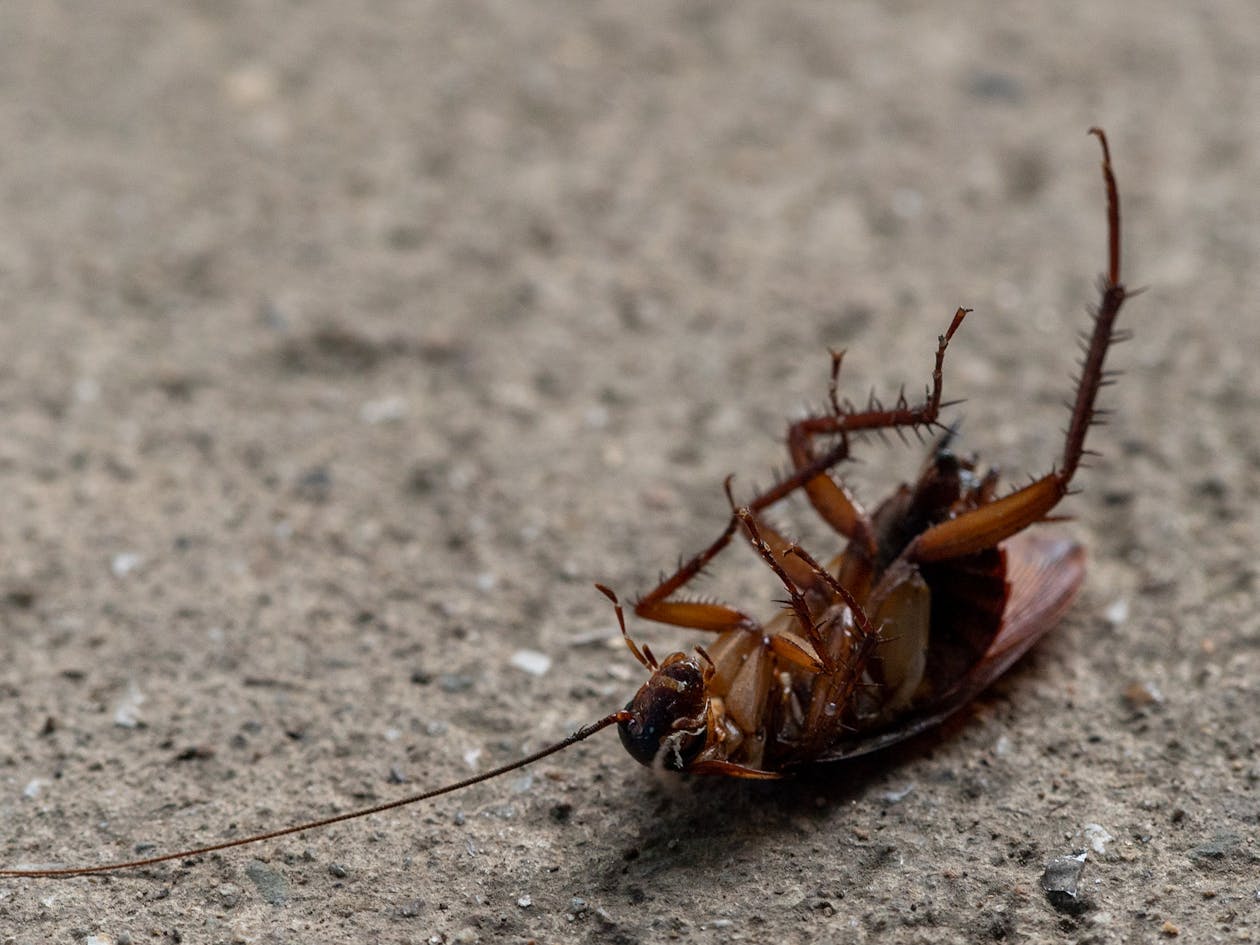
Laboratory measurements revealed startling differences between male and female cockroaches. Female specimens excrete approximately 2,900 endotoxin units per milligram of feces. Males produce roughly 1,400 endotoxin units per milligram, about half the female output.
Madhavi Kakumanu, an NC State research scholar working in Schal’s laboratory and study co-author, explained the disparity. “Female cockroaches eat more than males, so more endotoxins are shed from their fecal matter,” Kakumanu said.
Increased food consumption by females drives their higher toxin production. Larger appetites lead to more bacterial activity in their digestive systems, which then produces more endotoxin-laden waste. Each female roach becomes a concentrated source of indoor air pollution simply by going about her daily activities.
Your Kitchen Bears the Biggest Burden
Room-by-room analysis showed kitchens contained far more endotoxins than bedrooms. Cockroaches congregate where they find abundant food sources. Cabinets, pantries, and spaces behind appliances provide ideal habitats with easy access to crumbs, grease, and organic matter.
Bedrooms typically offer fewer attractive food options for roaches, so populations there remain smaller. Lower roach numbers translate directly to reduced endotoxin and allergen concentrations. Yet even bedrooms in heavily infested homes measured concerning levels of both substances.
Air circulation systems can spread contaminants from kitchens throughout entire living spaces. Heating, ventilating, and air conditioning filters collected during the study showed high contamination levels in infested homes. HVAC systems essentially distribute cockroach-generated pollutants to every room.
How Researchers Measured the Problem
Scientists divided participating homes into three categories for the study. One group consisted of infested apartments that would receive no treatment. A second group included infested units scheduled for professional extermination. A third control group comprised apartments with no cockroach problems.
Researchers returned at three-month and six-month intervals to collect follow-up samples. They counted live cockroaches and gathered both floor dust and airborne particle samples at each visit. Samples went to laboratories for analysis, measuring cockroach allergen Bla g 2 and endotoxin concentrations.
Baseline measurements confirmed that infested homes started with dramatically higher contamination levels. Scientists could then track how those levels changed over time with or without intervention. Control homes maintained consistently low readings throughout the entire study period.
Extermination Brings Dramatic Air Quality Improvements
Professional pest control made a decisive difference. Most infested homes that received extermination services became completely free of cockroaches within the study timeframe. Allergen levels in those treated homes dropped substantially after roaches disappeared.
Endotoxin concentrations also fell sharply in homes where pest control eliminated the insects. Measurements taken at three and six months post-treatment confirmed sustained reductions. Homes cleared of roaches approached the cleaner air quality found in apartments that never had infestations.
Meanwhile, untreated infested homes showed no improvement whatsoever. Both allergen and endotoxin levels remained dangerously high at every measurement point. Cockroach populations in these control units continued producing toxic waste and shedding allergens without interruption.
Partial Solutions Don’t Work
Half measures fail to solve the problem. Schal noted an important finding about incomplete pest control. “When you eliminate cockroaches, you eliminate their allergens. Small decreases in cockroaches don’t lower allergen levels because the remaining live cockroaches deposit more allergens,” he said.
Complete elimination proves necessary to achieve meaningful health benefits. A few surviving roaches continue contaminating the home at rates that negate any gains from reducing the population. Each live insect keeps producing allergens and endotoxins daily through its normal biological processes.
Schal added that endotoxins decreased only in homes where cockroaches were fully eliminated. His paper demonstrates that cockroaches represent the most important source of endotoxin deposits in infested residences. No other household source comes close to matching their toxic output.
Airborne Toxins Spread Beyond Dust
Both allergens and endotoxins can become airborne, not just settle into floor dust. Kakumanu confirmed that air samples collected during the study detected both contaminants floating freely. Walking across floors, opening cabinets, or any activity that disturbs settled dust can launch particles into the breathing zone.
Airborne distribution means even people who avoid direct contact with contaminated surfaces still inhale these substances. Children playing on floors face particularly high exposure risks. Air currents and household activities keep recycling particles back into suspension throughout the day.
HVAC filter analysis supported the airborne transmission findings. Filters captured significant amounts of both allergens and endotoxins in infested homes. Every time heating or cooling systems ran, they pulled contaminated air through ducts and potentially redistributed particles to other rooms.
Low-Income Homes Face Greater Risk

Economic factors compound the health threat. Research consistently shows stronger associations between cockroach presence and elevated endotoxin levels in low-income housing versus single-family homes. Multi-unit apartment buildings often struggle more with pest control than standalone houses.
Shared walls and common spaces in apartment complexes allow roaches to migrate between units. One infested apartment can compromise air quality in neighboring homes. Professional extermination works best when entire buildings receive treatment simultaneously, but cost barriers often prevent comprehensive approaches.
Children in low-income urban households already face higher asthma rates. Adding cockroach allergens and endotoxins to their environment creates a perfect storm for respiratory problems. Access to quality pest control services becomes a public health issue with real consequences for vulnerable populations.
What Comes Next for Asthma Research
Scientists plan to examine how allergens and endotoxins interact in animal models. Future studies will use mice bred to develop asthma symptoms when exposed to these substances. Researchers want to determine whether combined exposure produces worse outcomes than either contaminant alone.
Evidence suggests that allergens and endotoxins together might trigger more severe asthma attacks than either substance by itself. Schal noted that implications exist for worsened asthma due to interactions between the two. Mouse models will help clarify whether that hypothesis holds under controlled laboratory conditions.
Understanding these interactions could reshape how doctors and public health officials approach asthma management in homes with cockroach problems. If combined exposure proves more dangerous, recommendations for pest control might become even more urgent for families with asthmatic children.
Multiple organizations funded the research, including the U.S. Department of Housing and Urban Development Healthy Homes program, the Alfred P. Sloan Foundation, and the National Institute of Environmental Health Sciences. Additional support came from the National Institute of Allergy and Infectious Diseases, the U.S. Department of Agriculture National Institute of Food and Agriculture, and the Blanton J. Whitmire Endowment at North Carolina State University.
Some of the links I post on this site are affiliate links. If you go through them to make a purchase, I will earn a small commission (at no additional cost to you). However, note that I’m recommending these products because of their quality and that I have good experience using them, not because of the commission to be made.


 JOIN OVER
Comments