
CDC Ends All Monkey Testing in Its Laboratories

Last updated on

Scientists at the Centers for Disease Control and Prevention received an unusual directive several weeks ago. A recently hired deputy chief of staff, fresh from a brief stint at the Department of Government Efficiency, informed researchers that their primate program would be terminated. All of it. By year’s end. Sam Beyda delivered the message. A 2023 Columbia University economics graduate with no apparent science background, Beyda told CDC employees he spoke for Health and Human Services Secretary Robert F. Kennedy Jr. Approximately 200 macaques housed at CDC’s Atlanta headquarters would no longer be used for research. Studies on HIV prevention, hepatitis, and other infectious diseases would halt, some in mid-progress. What happens next represents something unprecedented in American biomedical research. For the first time since the National Institutes of Health retired research chimpanzees a decade ago, a federal agency is ending its entire in-house nonhuman primate program. Scientists, animal welfare advocates, and government officials are now wrestling with implications that extend far beyond 200 monkeys in Georgia.

How Kennedy’s Agenda Reached CDC Labs

Robert F. Kennedy Jr. made curtailing animal research part of his Make America Healthy Again platform. After President Donald Trump returned to power in January, several federal agencies announced plans to reduce reliance on animal studies. The FDA, the Environmental Protection Agency, and NIH are all committed to investing more in organ chips and other “new approach methodologies” instead of testing on animals. Beyda reportedly said he was speaking for Kennedy when he instructed the CDC to wind down its primate program. HHS aims to approve a shutdown plan before December ends, according to a government official familiar with the situation who requested anonymity. “It’s all happening ferociously fast,” that person said. “There is no choice but to end the program.” CDC did not respond directly to questions about its monkey program but stated regularly evaluates its research portfolio and strives to use non-animal methods whenever feasible. Bloomberg News confirmed Beyda’s role as deputy chief of staff, a position that now includes leading several initiatives to restructure the agency. Beyond delivering shutdown orders, Beyda has been contacting sanctuaries. In late October, he reached out to Scott Kubisch, who runs Peaceable Primate Sanctuary in Winamac, Indiana. Kubisch’s facility has built its reputation by working with academic labs to retire former research animals. Beyda wanted answers to two questions. How many monkeys could Peaceable Primate accept immediately? Would it be possible to retire all 200 within a year?

Research Legacy Faces Abrupt Termination
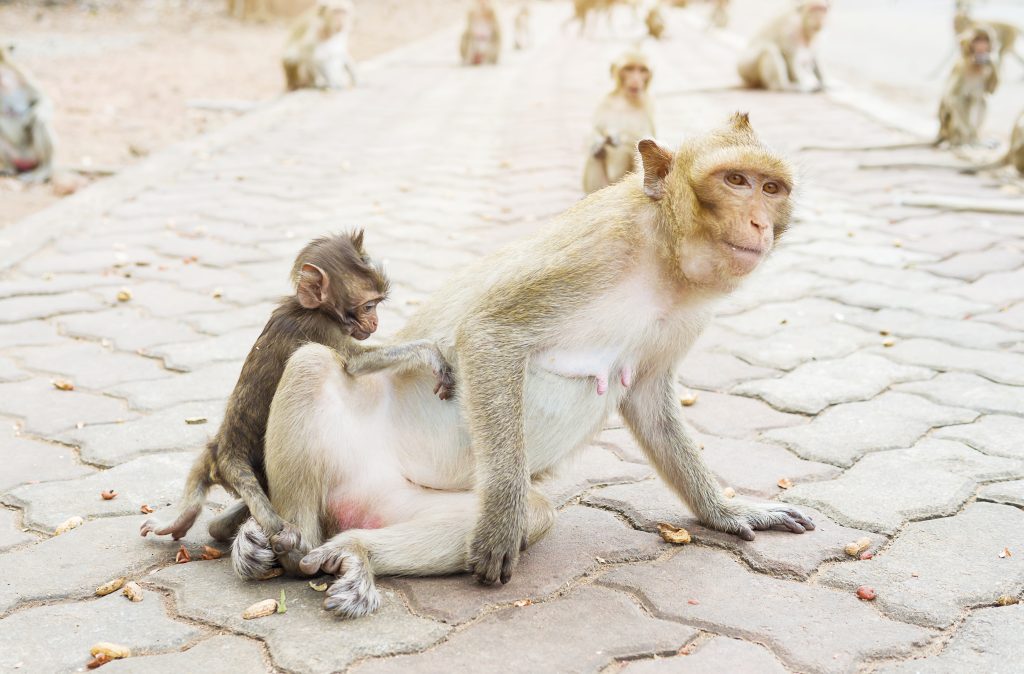
Mother Monkey is eating nuts
CDC’s primate program has been studying infectious diseases for decades. Rhesus and pig-tailed macaques at the Atlanta facility contributed to developing pre-exposure prophylaxis for HIV, a prevention strategy that helped slash infection rates globally. Scientists used the animals to evaluate preventives for sexually transmitted infections and test microbicides protecting women from HIV transmission. Some animals are currently enrolled in ongoing studies. If those end prematurely, researchers lose data already collected and investment already made. Demetre Daskalakis, former director of CDC’s Division of HIV Prevention, who resigned in August over concerns about the agency’s direction, questioned where pharmaceutical companies would test next-generation prevention drugs if CDC’s program disappears. “Whatever next drug Merck or Gilead will come up with to prevent these diseases, I’m not sure where that’s going to happen if it doesn’t start at CDC,” Daskalakis said. JoAnne Flynn, distinguished professor and chair of microbiology and molecular genetics at the University of Pittsburgh, called the decision very concerning. She has developed nonhuman primate models of tuberculosis and stressed that infectious disease research needs testing in systems similar to humans. Primates only get used as animal models when other options like mice or cell cultures prove ineffective. Deborah Fuller directs the Washington National Primate Research Center and has studied HIV for three decades. She described the CDC’s monkey research as being at the forefront of developing microbicides. “It’s a huge loss for the HIV field,” Fuller said. “There are no real alternatives.” Nancy Haigwood, professor and former director of the Oregon National Primate Research Center, offered a perspective on the scope. CDC studies represent only a small proportion of ongoing research at NIH-funded centers and universities, she noted. Other programs will continue because they’ve been peer-reviewed to justify experiments that can only be performed in nonhuman primates.

Animal Welfare Groups See Historic Victory
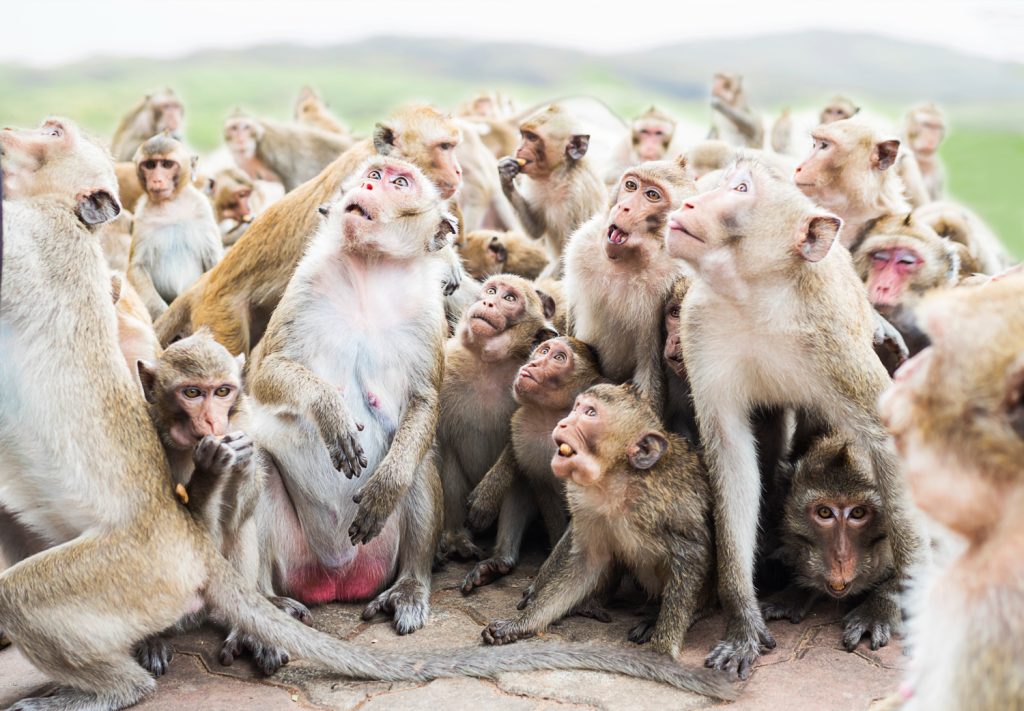
White Coat Waste Project has pushed for years to end government support for animal research. Justin Goodman, the organization’s senior vice president of advocacy and public policy, cheered the CDC decision. “This is exceeding our expectations,” Goodman said. “We think this will set a standard for other agencies.” Physicians Committee for Responsible Medicine issued a statement applauding the phaseout. Janine McCarthy, acting director of research policy for the medical ethics group, called the move historic. “For the first time, a U.S. agency is choosing modern, human-relevant science over a failed system of monkey experiments,” McCarthy said. “The CDC just sent a message to the entire biomedical establishment: The era of monkey experimentation is over.” McCarthy urged NIH and FDA to follow CDC’s lead while calling for funding to send the 200 macaques to accredited sanctuaries for the remainder of their lives. A Physicians Committee survey found vast majorities favor phasing out animal experiments in favor of human-relevant research methods. Animal welfare advocates pointed to safety concerns that have mounted over two decades. At least 15 monkey escapes from US research facilities or during transport have been publicly reported, each posing potential zoonotic disease risks to laboratory workers, first responders, transport personnel, and surrounding communities. Beyond safety, scientific limitations of monkey research have been documented extensively. Nearly 92 percent of drugs showing promise in animal testing fail when entering human trials because results don’t translate to human safety or efficacy. Alternative technologies like organoids and organ chips better model human biology and disease, advocates argue.

Where 200 Macaques Could End Up

Kubisch would need close to $14 million and at least one year to prepare Peaceable Primate Sanctuary for 200 additional monkeys. Funding for lab monkey retirement traditionally comes from individual facilities and private donors, not federal budgets. “I’m very interested in working with them,” Kubisch said. “It just hinges on funding.” CDC employees have advocated for gradual phaseout options. Some suggested transferring animals to national primate research centers at universities or another government institute where studies could continue. HHS appears to favor sanctuary placement instead. But not all animals can be moved. Sally Thompson-Iritani, assistant vice provost responsible for the University of Washington’s animal care program, explained that monkeys infected with SHIV cannot be transported for safety reasons. SHIV combines simian and human viruses, creating containment concerns. Those animals would likely require euthanization, which Thompson-Iritani called an incredibly irresponsible decision. Sanctuary capacity represents another challenge. Peaceable Primate is among the largest monkey refuges in North America, yet absorbing 200 macaques would strain even its resources. Facilities need space, staff, veterinary care, and ongoing operational funding. Animals could live for decades after research ends, requiring long-term financial commitments. Federal funding dedicated to sanctuary placement would help complete the transition responsibly and transparently, animal welfare groups emphasized. Without it, some animals face euthanization not because of infection status but because nowhere to house them.

Budget Threats Compound Uncertainty

CDC’s monkey program faced jeopardy before Beyda delivered shutdown orders. A House of Representatives budget bill setting 2026 spending levels would zero out funding for the HIV division at CDC. If the Senate agrees in final negotiations, studies on most CDC monkeys would end regardless of administrative directives. A high-level agency source who requested anonymity described an explicit desire to stop nonhuman primate research entirely. Scientists at other agencies are watching anxiously. A senior FDA investigator said researchers have no clarity on institutional support or funding, creating morale problems and functional difficulties. FDA currently houses about 45 baboons and macaques used in pertussis, tuberculosis, and other disease research. NIH oversees nearly 7,000 nonhuman primates, making the stakes considerably higher if the CDC’s decision becomes precedent for other agencies. Thompson-Iritani stressed that government agencies need more thought about what to do with lab monkeys once studies end. “We have a responsibility to take care of these animals. That should be included in any road map,” Thompson-Iritani said. “Because I don’t think this will stop with CDC.”

Competing Values Collide Over Research Future

Debate over CDC’s decision exposes fundamental tensions in biomedical research. Animal welfare advocates view the phaseout as moral progress and scientific advancement toward methods that better predict human responses. Biomedical researchers see it as abandoning tools that remain essential for infectious disease work despite limitations. Both sides present compelling evidence. Drug failure rates from animal testing suggest models need improvement. Yet breakthrough treatments, including HIV prevention strategies, emerged from primate research that couldn’t have happened through cell cultures alone. Organ chips and organoids show promise but haven’t yet replicated the complexity of whole-organism immune responses to pathogens. Kennedy’s influence over federal research priorities raises questions about how scientific decisions get made in government agencies. Beyda’s background in economics rather than biomedical research strikes some scientists as concerning when he’s delivering orders that end decades of infectious disease work. Others see fresh perspectives breaking institutional inertia around animal testing. Timing adds another layer. HHS wants approval by year’s end, giving researchers and animal care staff minimal time to wind down programs, preserve data from interrupted studies, and arrange animal placements. Scientists describe feeling pressured to accept decisions without adequate consultation about scientific consequences or alternative approaches.

What Comes After Monkeys Leave Atlanta

CDC’s program closure will test whether modern methodologies can truly replace primate research for infectious disease questions. If alternatives prove adequate, the decision validates advocates’ arguments that animal testing persists more from habit than necessity. If critical research gaps emerge, the closure demonstrates why scientists have been reluctant to abandon primate models. Either way, 200 macaques will leave the CDC facilities. Some may find homes at sanctuaries if funding materializes. Others face uncertain futures determined by infection status, available space, and budget realities. A few might transfer to other research institutions, though that seems unlikely given HHS’s apparent commitment to ending the program entirely. Research knowledge from interrupted studies will be lost. Scientists who built careers studying infectious diseases in primate models will need to retool their approaches or shift focus entirely. Pharmaceutical companies evaluating prevention strategies will need to find new testing pathways or accept longer development timelines. Animal welfare advocates will push for NIH and FDA to follow the CDC’s precedent. Biomedical researchers will monitor whether infectious disease research suffers measurable setbacks. Politicians will debate whether Kennedy’s Make America Healthy Again agenda produces the outcomes supporters envision. And somewhere in Indiana, Scott Kubisch waits to learn if his sanctuary will receive 200 former research macaques, funding to care for them, and time to prepare facilities for animals that could live another 20 years. Nobody knows yet if those pieces will come together before the CDC’s December deadline passes.

Some of the links I post on this site are affiliate links. If you go through them to make a purchase, I will earn a small commission (at no additional cost to you). However, note that I’m recommending these products because of their quality and that I have good experience using them, not because of the commission to be made.

About Juicing For Health

Loading...

Comments

Leave a Reply

XHTML: You can use these tags: